


BLOOM project
BLOOM project
The aim of the project is a healthy life for children and their mothers (10-24) living with or exposed to HIV.
- Children,
- Women,
Read more

A high number of children living with HIV and pregnant women are still unaware of their HIV status or not able to start and continue treatment. They have to deal with long distances to a health facility, lack of means to cover transport to a clinic or to ensure healthy nutrition, limited knowledge about HIV prevention and treatment, as well as stigma and traditional healing beliefs. At the health facility level, the staff is often overburdened and not sufficiently trained to offer child-friendly services. Paediatric HIV medicines are not always in stock. This all makes children and pregnant women unable to access health services to enroll in appropriate and life-saving HIV care and support.
Our approach comprises five components that mutually reinforce each other: community-based programmes; linking & learning; strategic partnerships, advocacy, and research. With this comprehensive package, we are determined to reach the following goals:

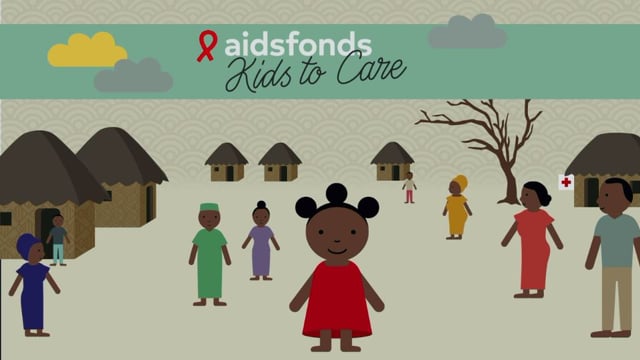
Aidsfonds works in collaboration with governments and local partners, to test and scale up community-based HIV programmes. These are based on our Kids to Care model which:
• Empowers communities to find and support pregnant women and children living with HIV
• Strengthens the links between communities and health facilities.
Community health workers are a crucial link at all four stages of HIV care for children: find, test, start and stay. It means children can live healthily with HIV.
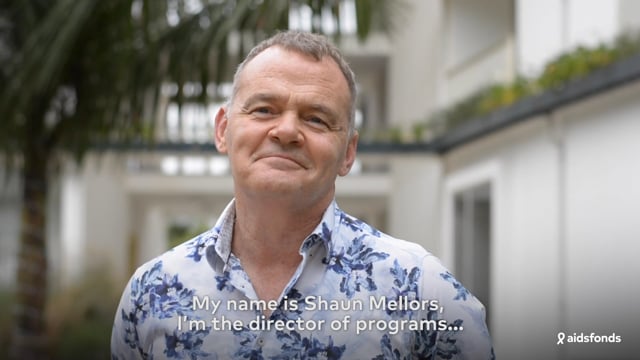
Find out more about Kids to Care“It does require a huge commitment, politically, financially but also from civil society to ensure that children are not left behind,” says Shaun Mellors, Director Community Stakeholder Engagement. Govt Affairs and Global Public Health ViiV Healthcare. “We see Aidsfonds as a very important strategic partner to ViiV Healthcare Positive Action but also to the global agenda to end paediatric AIDS.”
Watch the video with Shaun Mellors’ call to end paediatric AIDS
In 2016 Aidsfonds piloted and further developed the community intervention model for paediatric HIV in the Towards and AIDS-Free Generation in Uganda programme. Based on its positive results and valuable lessons including sustainability we contextualized and rolled out the model in Zimbabwe in 2018.
Currently the model is being implemented in 5 African high-burden countries to successfully find missing children in need of HIV treatment, care and support.

The aim of the project is a healthy life for children and their mothers (10-24) living with or exposed to HIV.
Read more

The KidzAlive@Home project in South Africa puts the child at the centre of care. Its needs are taken care of within a circle of key players, including their caregivers, the child’s family, community structures and the health facility.
Read more

Kusigata aims to contribute to children and mothers living with or affected by HIV living healthier lives and reach their full potential.
Read more

In eight districts in Taraba state, Nigeria, this project aims to increase uptake of HIV services among children aged 0-14 years and to reduce mother-to-child transmission, by 2022.
Read more

The Breakthrough Partnership is a commitment to end paediatric HIV in regions most urgent.
Read more

This community-based program will trace children living with HIV, who are not yet enrolled in health care or have dropped out, refer them to health centres and follow up on them after they are enrolled in care. Through community resource persons and village health teams, and using an integrated approach, we will address the barriers that are hindering children who are living with HIV access to treatment. 3600 children living with HIV will be traced and (re-)enrolled in health care as a result of the program.
Read more


